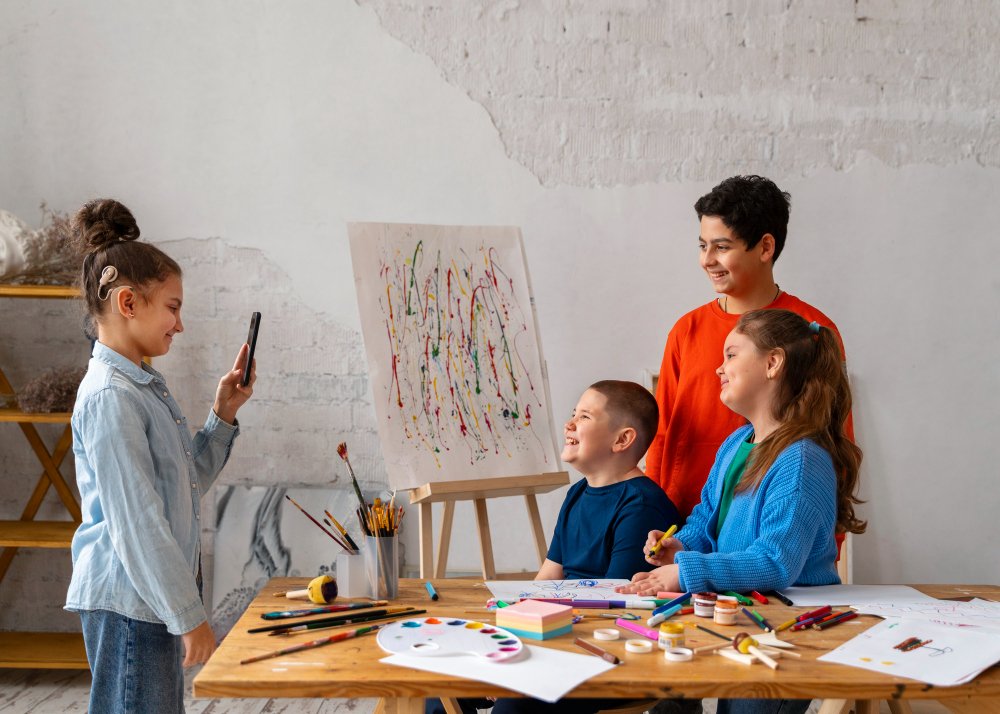
The arts have often occupied a precarious position within educational systems—valued rhetorically but frequently marginalized in practice through limited scheduling, inadequate funding, and exclusion from accountability measures. However, contemporary research in neuroscience, cognitive psychology, and educational outcomes increasingly demonstrates that arts integration offers powerful learning pathways across all curriculum areas. This growing evidence base has sparked renewed interest in approaches that incorporate visual arts, music, dance, theater, and media arts throughout education, with significant implications for how teachers design learning experiences across all subject areas.
Arts integration differs fundamentally from traditional approaches that treat arts as separate subjects. Where conventional models position arts education as specialized instruction in discrete disciplines, integration weaves artistic processes and creative expression into the fabric of learning across content areas. This approach positions the arts not as supplementary enrichment but as essential methodologies for exploring, understanding, and demonstrating knowledge in mathematics, science, language arts, social studies, and other domains. Effective integration maintains both authentic artistic processes and rigorous content learning rather than subordinating either to the other.
Visual thinking strategies exemplify how artistic analysis develops cognitive capabilities applicable across disciplines. This approach uses carefully sequenced questions about visual artworks to develop observation skills, evidence-based reasoning, perspective-taking, and collaborative meaning-making. Research demonstrates that these facilitated discussions improve not only art appreciation but also reading comprehension, scientific observation, and critical thinking. The transferability occurs because close examination of visual complexity develops cognitive habits that apply to textual analysis, scientific phenomena, mathematical problem-solving, and historical interpretation.
Music integration leverages the neural connections between musical processing and other cognitive functions. Mathematical thinking develops through exploring patterns, proportions, and spatial-temporal reasoning in musical composition and performance. Language acquisition benefits from the phonological awareness, auditory discrimination, and rhythm sensitivity that musical training enhances. Memory systems strengthen through the multimodal encoding that occurs when information connects with melody and rhythm. These connections explain why musical integration strategies like content-based songs, rhythmic mnemonic devices, and sound pattern analysis facilitate learning across seemingly unrelated domains.
The Integration of Arts Education
Embodied learning through movement and dance creates distinctive cognitive pathways by engaging kinesthetic intelligence and spatial awareness. Abstract concepts become concrete when physically enacted—mathematical operations transform into movement sequences, literary narratives manifest through choreographed interpretation, scientific processes become embodied simulations. This approach recognizes that physical movement activates different neural networks than sedentary learning alone, creating multiple memory pathways and engaging students whose learning strengths lie in bodily-kinesthetic rather than verbal-linguistic intelligence.
Drama-based pedagogies leverage the cognitive and emotional engagement of role-play, simulation, and perspective-taking. Historical events become experientially understood through dramatic reenactment with primary source integration. Scientific concepts come alive through role-playing cellular processes or ecosystem relationships. Ethical dilemmas gain complexity through forum theater exploring multiple perspectives and consequences. These approaches develop not only content knowledge but also empathy, communication skills, and ethical reasoning through the embodied experience of different viewpoints and circumstances.
Design thinking methodologies from visual arts provide structured creative problem-solving processes applicable across disciplines. The iterative cycle of empathizing, defining problems, ideating potential solutions, prototyping possibilities, and testing outcomes offers a powerful framework for approaching complex challenges in any domain. This artistic process develops not only creative capacity but also resilience through normalizing revision, collaboration through incorporating multiple perspectives, and metacognition through reflecting on process alongside product.
Studio habits of mind—including observation, envisioning, reflection, expression, exploration, understanding art worlds, and developing craft—build cognitive dispositions valuable far beyond artistic production. When teachers intentionally cultivate these habits across subject areas, students develop persistence in revising work, comfort with open-ended problems, ability to envision multiple possibilities, and skills in giving and receiving constructive feedback. These dispositions support not only artistic development but also the critical and creative thinking essential for all academic disciplines.
Curriculum Concerns
Cultural responsiveness finds natural expression through arts integration that incorporates diverse artistic traditions, cultural aesthetics, and creative practices. When curriculum includes artistic expressions from varied cultural contexts—not as exotic additions but as valued knowledge systems with distinctive approaches to understanding and representing the world—students from those cultures see themselves reflected in academic content while all students develop broader cultural literacy. This integration acknowledges that artistic expression represents not merely decorative enhancement but fundamental epistemology—different ways of knowing, understanding, and communicating across cultural contexts.
Assessment approaches for arts-integrated learning require methodologies that capture complex, multidimensional outcomes beyond standardized measures. Performance-based assessment, portfolio documentation, process documentation, and student reflection provide more comprehensive evidence of both artistic development and content mastery. These approaches reveal not only what students know but how they think, how they approach problems, and how they apply knowledge in creative contexts. Developing valid, reliable assessment for integrated learning remains challenging but essential for demonstrating its value within accountability-focused educational systems.
Research evidence increasingly demonstrates both cognitive and affective benefits of arts integration. Studies document improvements in academic achievement across subject areas, particularly for students from economically disadvantaged backgrounds and English language learners. Beyond academic metrics, research shows positive impacts on attendance, behavior referrals, student engagement, and teacher satisfaction. These findings contradict perceptions that arts integration represents a distraction from “academic” content, instead demonstrating that artistic approaches often enhance rather than detract from traditional learning outcomes.
Equity considerations provide perhaps the most compelling rationale for arts integration. When arts remain separate subjects, they often become available only to privileged students through selective programs, private lessons, or schools with abundant resources. Integration democratizes access to artistic processes as learning tools for all students regardless of specialized talent or resource access. Furthermore, artistic approaches often engage students who struggle with traditional instructional methods, creating alternative pathways to academic success for diverse learners whose strengths may lie in visual, musical, kinesthetic, or dramatic intelligence rather than conventional academic modalities.
Implementation challenges include teacher preparation systems that maintain rigid boundaries between arts and academic content, assessment systems that measure narrow outcome bands, scheduling structures that fragment learning into disconnected segments, and persistent perceptions that arts represent enrichment rather than essential methodology. Addressing these challenges requires coordinated efforts across policy, preparation, professional development, and school leadership—recognizing that meaningful integration represents not merely instructional technique but educational philosophy about the nature of learning and knowing across domains.
Conclusion
As education systems increasingly emphasize creativity, critical thinking, collaboration, and communication as essential competencies for contemporary citizenship and economic participation, arts integration offers proven methodologies for developing precisely these capabilities. The approach acknowledges that artistic processes represent not mere cultural embellishment but fundamental cognitive tools that humans have used throughout history to explore, understand, and communicate about their world. By reintegrating these processes across the curriculum, education systems reclaim the natural connections between artistic and analytical thinking that artificial academic boundaries have too often separated to the detriment of holistic human development and meaningful learning.