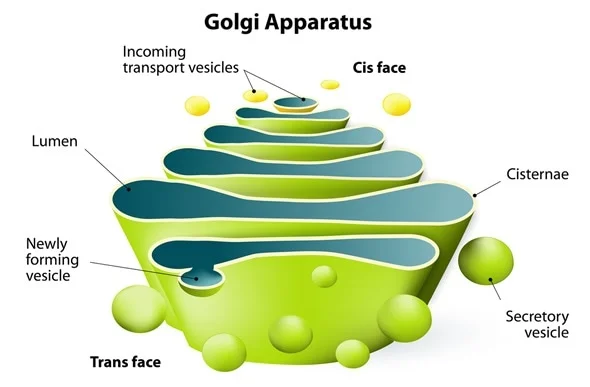
The Golgi apparatus is a crucial organelle in our cells. It plays a vital role in processing and delivering proteins. Let’s break down its functions and importance.
What is the Golgi Apparatus?
The Golgi apparatus is often described as the post office of the cell. It modifies, packages, and sorts proteins and lipids. These biochemicals are essential for various cellular functions.
Key Characteristics of the Golgi Apparatus
- Structure: It’s made up of flat, disc-shaped membrane sacs called cisternae.
- Location: Found near the endoplasmic reticulum (ER) in eukaryotic cells.
- Appearance: Resembles a stack of pancakes.
Main Functions of the Golgi Apparatus
1. Protein Modification
The Golgi apparatus alters proteins received from the ER. Modifications can include the addition of sugars, lipids, or phosphate groups. These changes are vital for protein functionality.
2. Protein Sorting and Packaging
After modification, proteins get sorted. The Golgi determines where each protein should go. It packages them into vesicles for transport to their destinations, such as the cell membrane or export outside the cell.
3. Lipid Management
Besides proteins, the Golgi apparatus also processes lipids. It modifies and distributes them to where they are needed. This function helps maintain cell membrane integrity and overall health.
4. Creation of Lysosomes
Lysosomes are essential for breaking down waste materials in the cell. The Golgi apparatus helps produce these organelles by packaging digestive enzymes.
Why is the Golgi Apparatus Important?
The functions of the Golgi apparatus contribute significantly to cellular health. Here are a few reasons why its roles are critical:
- Cellular Communication: Modified proteins often serve as signals for communication between cells.
- Regulation of Metabolism: Proper lipid and protein management ensures balanced metabolic activities.
- Waste Management: By creating lysosomes, the Golgi helps keep cells clean and functional.
Factors Affecting Golgi Function
Several factors can disrupt the normal functioning of the Golgi apparatus. Understanding these can help in various biological fields.
1. Genetic Mutations
Mutations in genes that code for Golgi proteins can lead to dysfunction. This can affect protein processing and lead to various diseases.
2. Environmental Stress
Stressors like toxins or extreme temperatures can impair Golgi functions. Cells may not process proteins efficiently under stress.
3. Aging
As organisms age, Golgi apparatus functionality may decline. This can lead to an increase in cellular waste and decreased efficiency.
Conclusion
In summary, the Golgi apparatus is essential for modifying and sorting proteins and lipids. Its functions are crucial for cellular health and communication. Understanding how this organelle works can provide insights into many biological processes.